
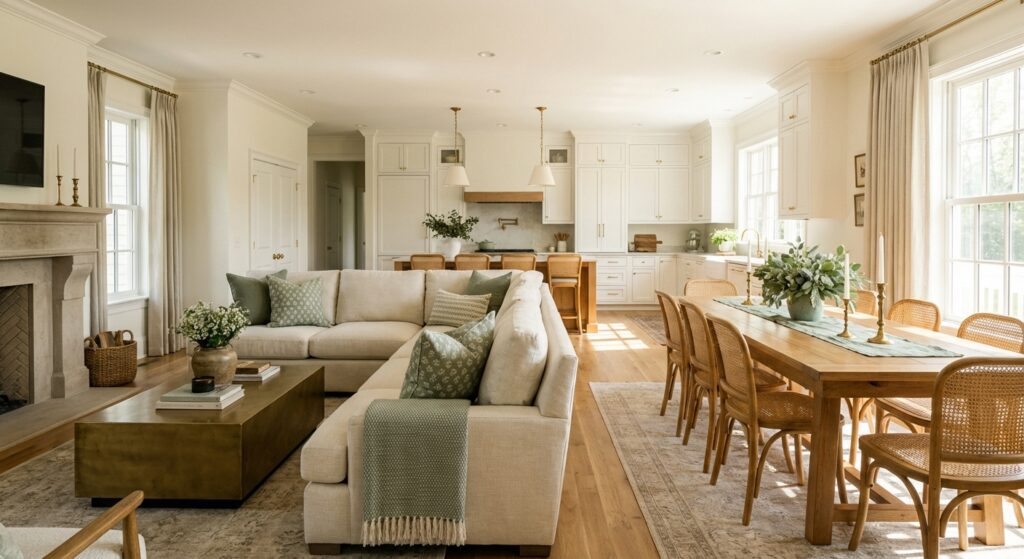
How to Create a Cohesive Home Decor Style Across All Rooms (Without Starting Over)
Creating a cohesive home decor style doesn’t require a complete renovation or an unlimited budget. If you’ve ever walked through your home and wondered why each room feels like it belongs to a different house, you’re not alone. Today I’m sharing my practical approach to creating a consistent home aesthetic that flows beautifully from room to room—even when you’re working with furniture and pieces you already own.
Here’s the thing: cohesive doesn’t mean matchy-matchy. It means intentional. And with four kiddos running around, I’ve learned that intentional decorating is actually easier to maintain than the alternative.
Why Your Home Might Feel Disconnected (And Why That’s Okay)
Before we dive into solutions, let me share something that might make you feel better. When we first moved into our home, I decorated each room separately—grabbing items I loved without thinking about how they’d work together. The playroom had bright primary colors, the living room leaned coastal, and our bedroom was somehow accidentally farmhouse?
Sound familiar?
The good news is that you don’t need to start from scratch. Most homes already have a foundation to build on. You just need to identify your common thread and pull it through each space.
The “Common Thread” Approach
Think of your home like a story. Each room is a chapter, but they all need to be part of the same book. Your common thread might be:
- A color that appears in every room (even in small doses)
- A material like wood tones, brass, or rattan
- A style element like curved furniture or traditional details
- A feeling you want every space to evoke
For our home, the common thread is a warm, light aesthetic with traditional elements. That doesn’t mean every room looks identical—far from it. But there’s a visual connection that makes sense as you move through our space.
Step 1: Create Your Whole-House Color Palette
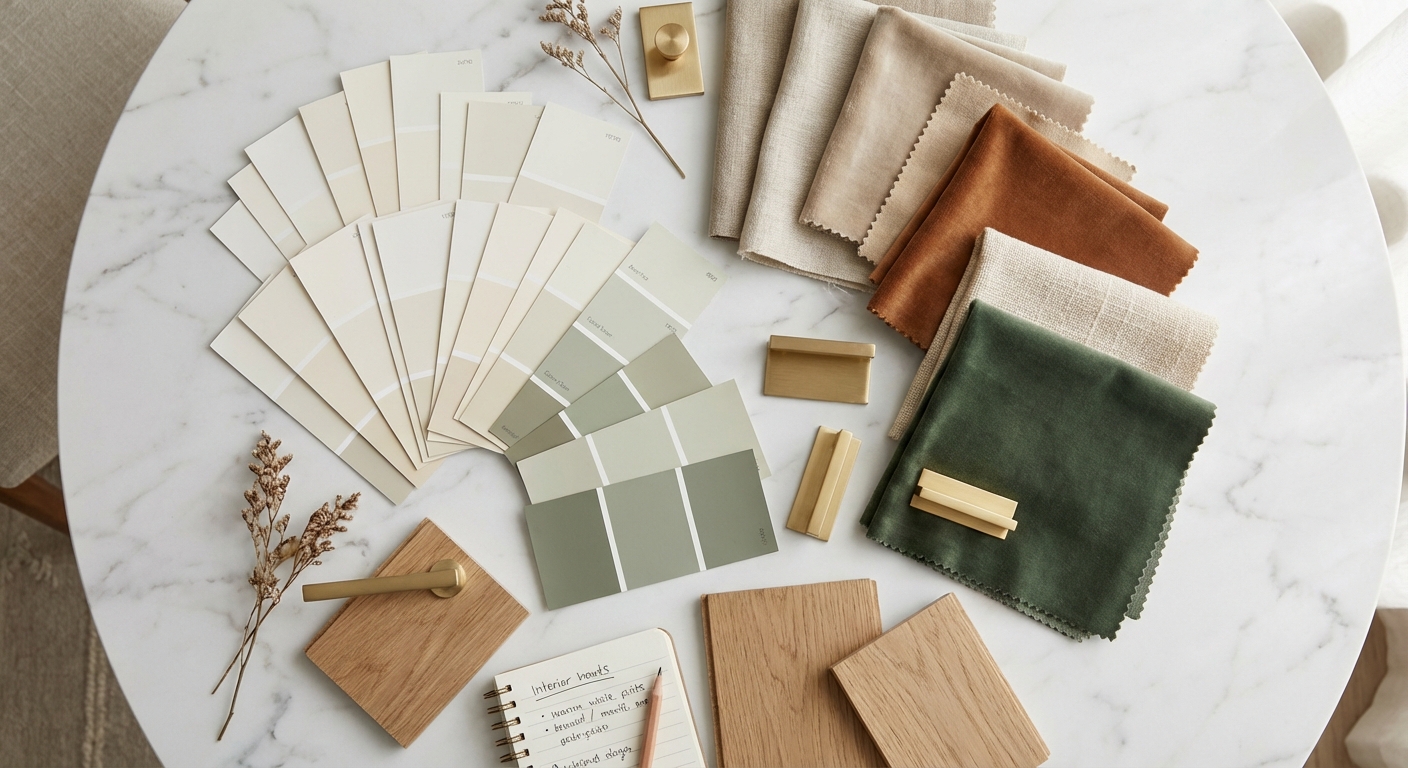
This is where the magic happens, y’all. A cohesive color palette is the single most effective way to create room-to-room decor flow without spending much money at all.
The 60-30-10 Rule Made Simple
You’ve probably heard of this rule, but here’s how it actually works in a home with multiple rooms:
- 60% is your dominant color (usually walls and large furniture)
- 30% is your secondary color (accent furniture, rugs, curtains)
- 10% is your accent color (pillows, artwork, decorative objects)
The key for whole house decorating is that these percentages shift from room to room, but the colors stay consistent. Your living room’s 10% accent might become your dining room’s 30% secondary color.
Building Your Palette
Start by identifying colors you already love and have in your home. Look at:
- Your most-used rooms
- Pieces you absolutely won’t replace
- Colors that make you feel happy and calm
I recommend limiting your whole-house palette to 5-6 colors total: 2-3 neutrals and 2-3 accent colors. This gives you enough variety to keep things interesting while maintaining that consistent home aesthetic.
Budget-friendly tip: Before buying anything new, photograph items you already own and use a free color palette tool (I love Coolors.co) to identify your existing colors. You might be surprised to find you already have a palette—it just needs to be more intentional.
Step 2: Identify Your Signature Materials and Finishes
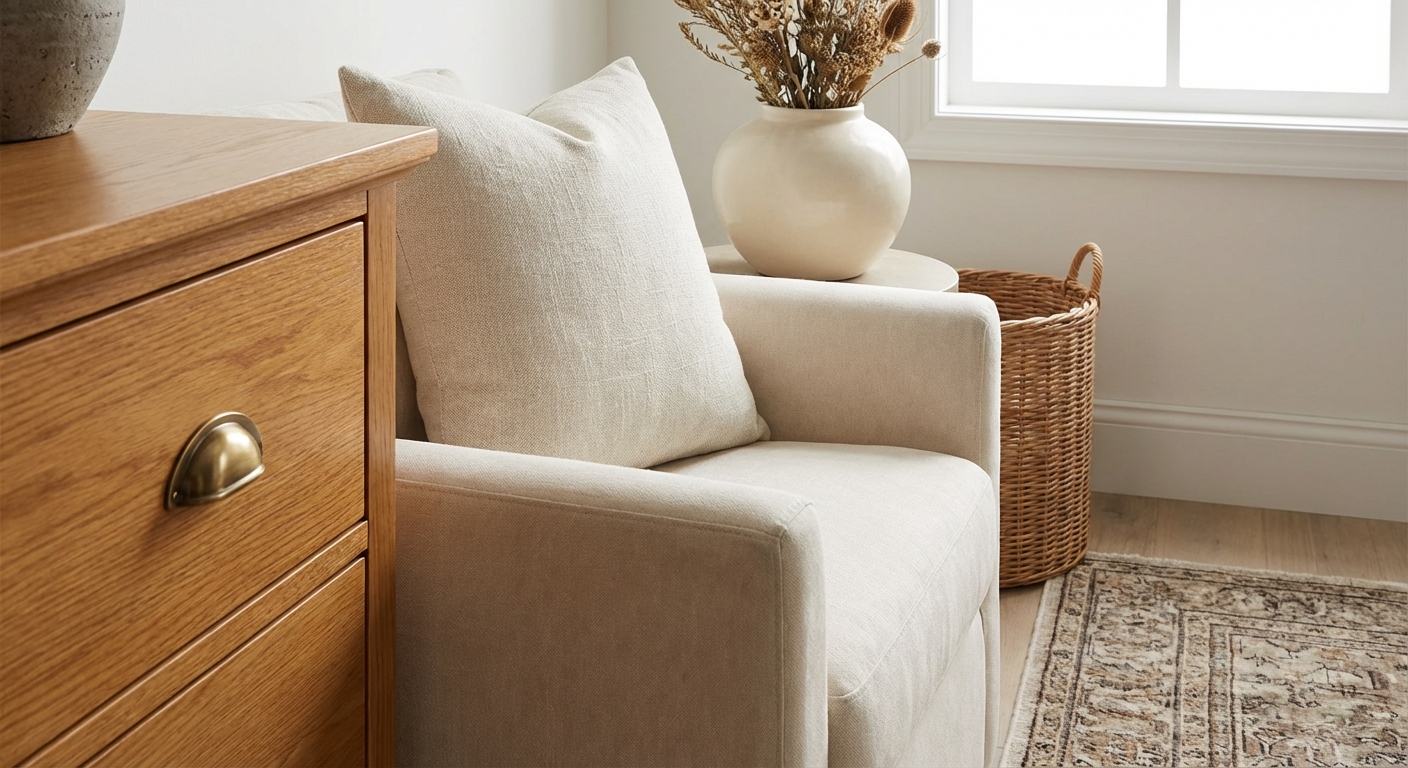
Beyond color, the materials in your home create visual continuity. This is something interior designers do naturally, but once you know to look for it, you’ll see it everywhere.
Materials That Create Home Style Flow
Walk through your home and note the finishes you see most often:
- Wood tones: Are they warm (honey, oak) or cool (gray-washed, espresso)?
- Metals: Brass, chrome, black, mixed?
- Textiles: Linen, cotton, velvet, leather?
For a cohesive look, try to stick to 2-3 wood tones and 1-2 metal finishes throughout your home. This doesn’t mean every room has the exact same lamp—it means the finishes speak the same design language.
The “Three Room Test”
Here’s a practical exercise: Choose any item in your home. Can you picture it working in at least three different rooms? If yes, it’s likely a cohesive piece. If it only works in one specific spot, it might be the thing that’s making that room feel disconnected.
Budget tip: You can unify mismatched furniture with paint or new hardware. Spray painting lamp bases or switching out cabinet knobs to match throughout your home costs very little but makes a significant impact.
Step 3: Create Intentional Transitions Between Rooms
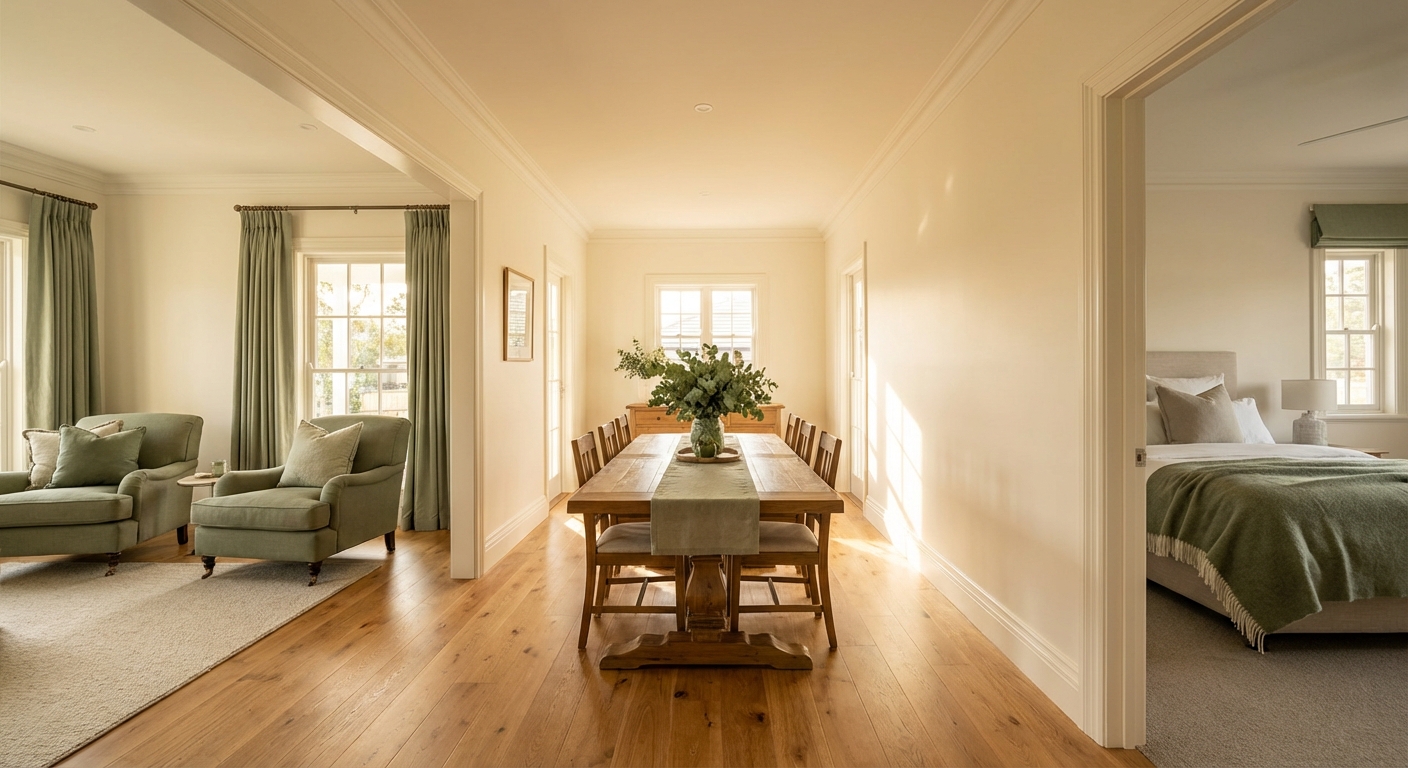
This is especially important if you have an open floor plan (raises hand), where multiple spaces are visible at once. The transition between rooms should feel natural, not jarring.
Strategies for Room-to-Room Decor Flow
Repeat colors in unexpected places. The sage green throw pillow in your living room can echo in your kitchen’s dish towels and your bathroom’s soap dispenser. These small touches create subconscious connections.
Use rugs strategically. In open floor plans, rugs define spaces while maintaining cohesion. Choose rugs that share at least one common color or a similar style (all traditional, all modern, etc.).
Consider sightlines. Stand in one room and look into the next. What do you see? Make sure those visible elements complement each other.
Let architecture guide you. If your home has consistent trim, flooring, or architectural details, let these be part of your common thread. Paint all your doors the same color. Use consistent window treatments.
Handling Rooms With Different Functions
Here’s where it gets tricky. How do you make a playroom feel connected to your formal dining room? Or a home office feel like it belongs with your cozy bedroom?
The answer: Your common thread adapts, but it doesn’t disappear.
In our playroom, I kept the same warm wood tones and white walls as the rest of our home, but the accent colors are brighter and more playful. It still feels like it belongs to our house—just the kid-friendly chapter.
For home offices, bring in your accent colors through desk accessories, artwork, or a rug. Function comes first, but cohesion is still possible.
Step 4: Shop With Your Palette (Not Your Impulses)
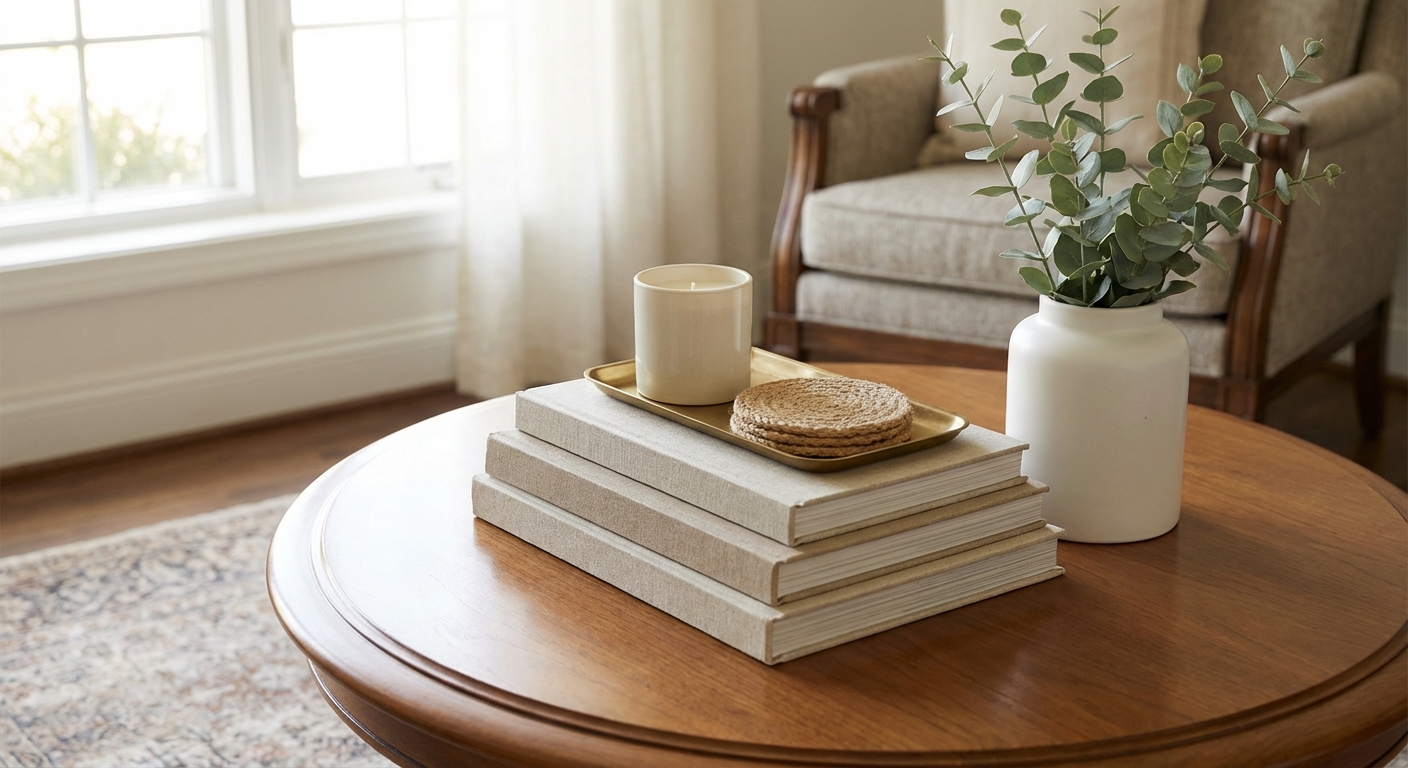
This might be the hardest part for those of us who love a good Target run. But shopping with intention is what transforms a house full of things you like into a cohesive home you love.
The “Will It Work?” Checklist
Before buying any decor item, ask yourself:
- Does it fit within my 5-6 color palette?
- Does it match my established material/finish choices?
- Could it work in multiple rooms if needed?
- Does it support the feeling I want my home to have?
If you can’t answer yes to at least 3 of these questions, put it back. I know, I know. That quirky lamp is calling your name. But trust me—sticking to your plan creates a home that feels so much more peaceful and pulled-together.
Where to Find Coordinating Pieces Without Breaking the Budget
- Target’s Threshold and Project 62 lines offer tons of coordinating pieces at accessible prices. Their picture frame section is especially great for finding matching styles.
- IKEA is perfect for basics that won’t compete with statement pieces
- HomeGoods/TJ Maxx requires patience but offers designer-look items at fraction of the cost—just stick to your color palette
- Amazon has excellent options for coordinating sets (think matching throw pillow covers or consistent picture frames)
My favorite budget find: Neutral linen throw pillow covers in a set. They work in almost every room, wash well (essential with littles), and create instant cohesion for around $40.
Step 5: Edit, Then Add (Not the Other Way Around)
One of the biggest mistakes I see is adding more to try to achieve cohesion. But often, the opposite is true. A cohesive home needs breathing room.
The Editing Process
Go room by room and remove anything that:
- Doesn’t fit your color palette
- Feels random or out of place
- Was purchased impulsively and never quite worked
- Is there out of obligation rather than love
Put these items in a box. Live without them for a few weeks. If you miss something, it can come back. But most things? You won’t miss them at all.
Then Add Intentionally
Once you’ve edited, you’ll see what’s actually needed. Maybe it’s a lamp in your secondary color. Maybe it’s artwork that ties two rooms together. Maybe it’s simply a plant (greenery works everywhere).
Build slowly. A cohesive home isn’t created in a weekend shopping spree—it develops over time through intentional choices.
Making Peace With the Process
Here’s something I want you to hear: Creating a cohesive home takes time. It’s not about perfection or Pinterest-worthy rooms. It’s about creating a space that feels like you—consistent, comfortable, and full of grace.
Some rooms in our home still aren’t “done.” And honestly, they might never be. But knowing my common thread—that warm, light, traditional aesthetic—means I can make confident decisions when opportunities arise.
Your home tells your family’s story. Make sure all the chapters work together.
Frequently Asked Questions
How do I create a cohesive look if my spouse and I have different tastes?
This is so common, and the key is finding your overlap. Sit down together and identify what you both like (even if it’s just “not too cluttered” or “warm colors”). Your common thread might be simpler than expected—maybe it’s a shared love of natural materials or a preference for clean lines. Build from that foundation and compromise on the details.
Should every room have the same paint color for a cohesive home?
Not necessarily. Using the same paint color everywhere can actually feel flat and boring. Instead, choose paint colors from the same family or that share undertones. A warm white in the living room and a soft sage in the bedroom can feel perfectly cohesive if they’re both warm-toned. The trick is avoiding jarring contrasts between connected spaces.
How do I make thrifted or inherited furniture feel cohesive with newer pieces?
This is where paint and hardware become your best friends. A mismatched dresser can be painted to match your color palette, or you can swap out the knobs to coordinate with other rooms. For upholstered pieces, throw blankets and pillows in your chosen palette can work wonders. The patina of older pieces often adds character—just make sure the surrounding elements feel intentional.
What’s the biggest mistake people make when trying to create room-to-room flow?
Trying to match everything exactly. Cohesive design is about coordination, not replication. If every room has the exact same colors in the exact same proportions, your home will feel boring and staged. Let each room have its own personality while sharing that common thread. Think of it like a family—everyone’s different, but you can tell they belong together.
How long does it take to create a truly cohesive home?
Most homes take 2-3 years to feel fully cohesive, and that’s okay. Don’t rush to fill every space or solve every design challenge at once. Buy the right thing, not the right-now thing. Your home will come together more beautifully when you give yourself permission to take your time.
—
This post contains affiliate links. If you make a purchase, I may earn a small commission at no extra cost to you.