
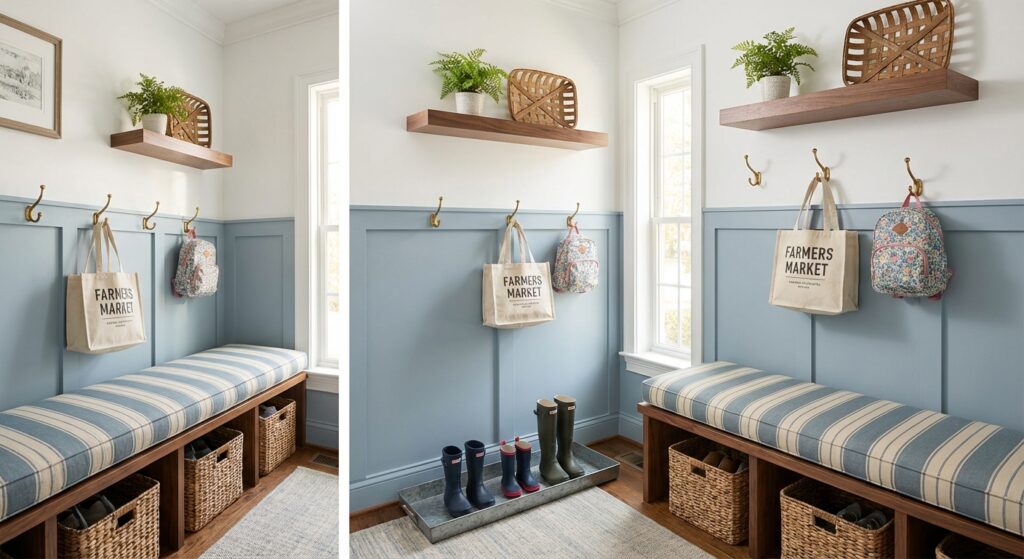
Mudroom Ideas for Families with Kids (Without the Renovation)
Budget-friendly ways to create a functional family drop zone in any entryway, hallway, or garage
—
You don’t need a dedicated mudroom to get your family organized. With four kiddos under my roof, I know exactly what it feels like to open the front door and trip over a pile of shoes, backpacks, and jackets that somehow multiplied during the school day. For the longest time, I thought the only solution was a full renovation with custom built-ins, but here’s the thing: you can create a completely functional mudroom setup with furniture, hooks, and a little bit of strategy.
This guide covers practical mudroom ideas that work for families with kids, and not a single one requires knocking down a wall or hiring a contractor. Whether you have a small entryway, a hallway, or even a corner of your garage, there’s a solution here for you.
Start with the Drop Zone Concept
The most important shift I made was thinking of our entryway as a “drop zone” instead of waiting for the dream mudroom. A drop zone is simply a designated area where every family member can deposit and retrieve their everyday essentials: coats, shoes, backpacks, keys, and whatever else walks in and out of the house with you.
The key components of a good drop zone are:
- Hooks for coats and bags
- A bench or seat for putting on and taking off shoes
- Storage bins or baskets to corral smaller items
- Shoe storage to keep the floor clear
That’s it. You don’t need a whole room. You need a system.
Where to Put Your Drop Zone
Take a look around your home and think about where your family actually enters and exits. For us, the garage entry is the most-used door, so that’s where our main drop zone lives. Here are the most common spots:
- Entryway wall: Even a 3-foot stretch of wall can hold hooks, a shelf, and a boot tray.
- Hallway: A narrow hall tree or slim bench fits perfectly along one wall.
- Coat closet conversion: Remove the closet door, add hooks and baskets, and suddenly you have an open mudroom cubby area.
- Garage entry: A section of the garage wall near the door to the house is one of the best spots for a no-renovation mudroom. A board-and-batten treatment with peg hooks, a bench, and some baskets can be done for under $200.
- Under the stairs: If you have any usable space under your staircase, this is a hidden gem for a tucked-away drop zone.
The Bench: Your Mudroom Foundation
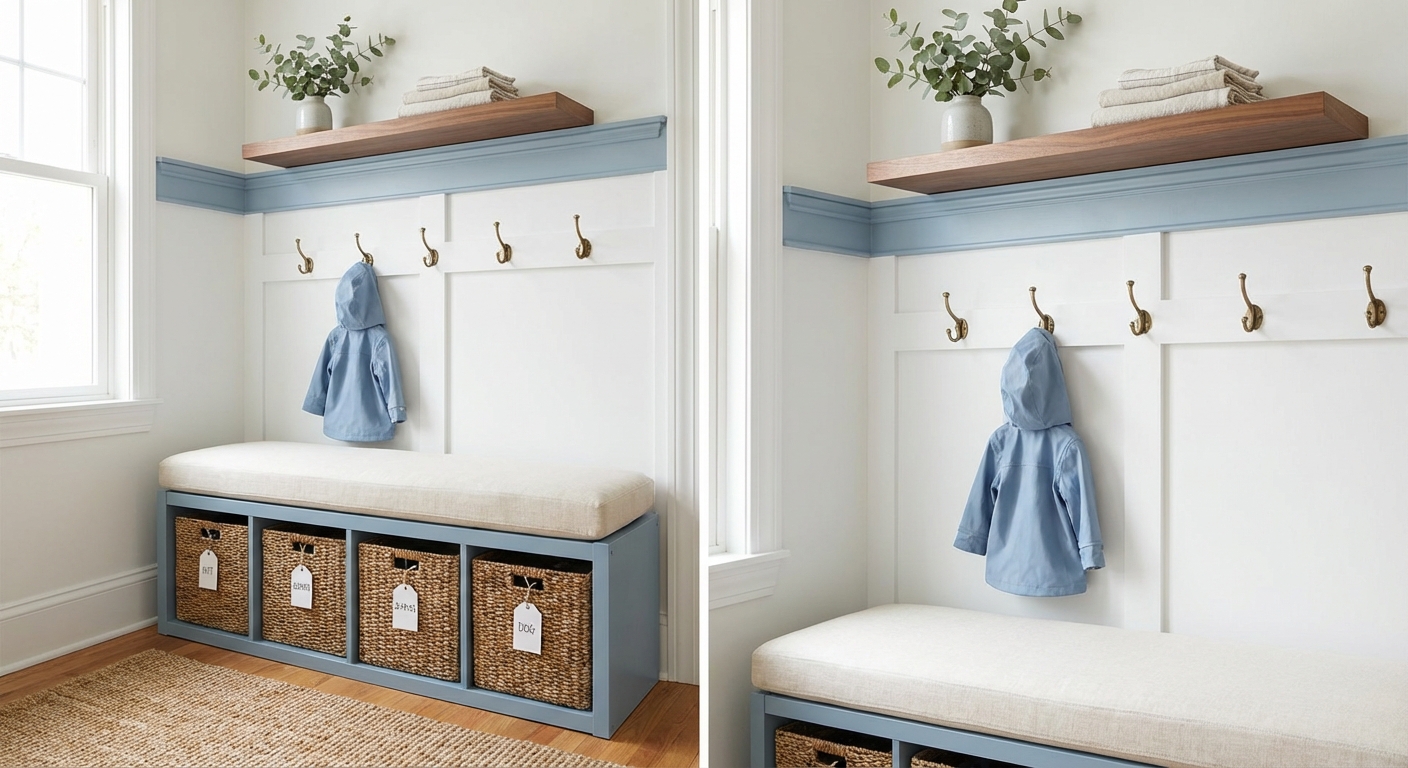
A sturdy bench is the foundation of any mudroom setup. It gives the kiddos a place to sit while pulling on boots, and the space underneath becomes prime shoe storage real estate.
Best Benches Under $200
| Bench | Price Range | Where to Buy | Best For |
|---|---|---|---|
| VASAGLE 3-in-1 Hall Tree | $80-120 | Walmart | All-in-one solution with hooks and shoe rack |
| Copan Mid Century Bench | ~$130 | Target | Clean look with open storage below |
| IKEA KALLAX (2×2, turned sideways) | ~$50 | IKEA | Hackable cubby bench with basket inserts |
| ClosetMaid Cubby Bench | $70-90 | Walmart | Simple, solid, fits standard baskets |
My favorite budget-friendly option is the IKEA KALLAX hack. You take the 2×2 KALLAX shelf unit (~$50), turn it on its side, add a cushion on top, and slide baskets into each cubby for shoes. It looks custom, costs under $100 total, and you can label each cubby for each family member. If you need something taller and more complete, the VASAGLE hall trees at Walmart offer an all-in-one solution with a bench, shoe rack, hooks, and an upper shelf, typically for under $150.
If you want something that really looks built-in, the IKEA HEMNES TV unit makes a surprisingly good mudroom bench. The drawers hide shoes beautifully, and you can add wall-mounted shelves above it for a custom look without a single power tool (aside from a drill for the shelves).
Hooks: The Most Important Piece
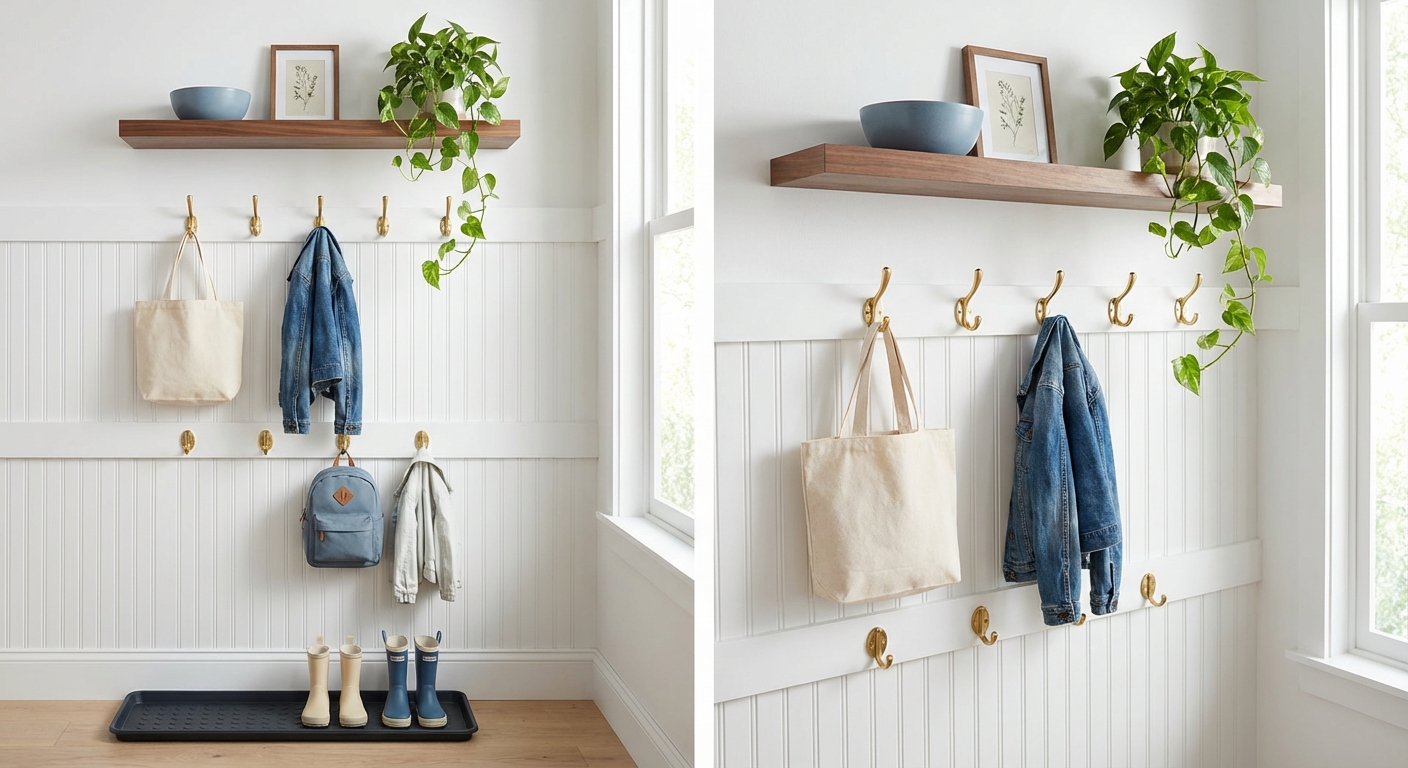
Here’s the thing about hooks: they are the single most important element in a family mudroom setup. If your kiddos can’t hang up their backpack and coat in two seconds, they won’t do it. And honestly, the same goes for adults.
How to Set Up a Two-Tier Hook System
For families with kids, I recommend a two-tier hook system with hooks at two heights:
- Upper row at 60-66 inches: For adults and older kids. This is your coats, purses, and tote bags row.
- Lower row at 42-48 inches: For littles. This is the backpack, jacket, and lunchbox row. For toddlers, you can even go as low as 36 inches.
Space your hooks 6-10 inches apart so coats and bags have room to hang without crowding each other.
Best Hook Options
- Umbra Flip Wall-Mounted Rack (~$35-45, Walmart): The hooks retract when not in use, so they sit flat against the wall. Available in 5-hook and 8-hook versions. These look sleek and modern.
- IKEA SKADIS Pegboard (~$20-30, IKEA): A modular system where you can add hooks, baskets, and shelves anywhere on the board. Great for kids because you can rearrange as they grow.
- Command Hooks (~$10-15, Walmart): Damage-free and perfect if you’re renting or don’t want to drill into walls. They hold up to 7.5 pounds, which handles most jackets and kid backpacks.
- Classic double coat hooks (~$3-5 each, hardware store): The most affordable option. Install 4-6 of these in a row at the right heights and you’re set.
Pro tip: Install at least one hook per family member, plus one or two extras for guests. With a family of six, that means 8 hooks minimum. We have 10 because the littles tend to accumulate more gear than the rest of us.
Per-Person Organization: Give Every Family Member a Zone
This is the strategy that made the biggest difference for us. Instead of one big shared space where everything gets jumbled together, each family member gets their own dedicated zone. It’s a simple concept, but it completely changed our morning routine.
What Each Person’s Zone Should Include
- 1-2 hooks at the right height for their age
- A basket or bin for hats, gloves, scarves, and small items
- A shoe cubby or spot for their current-rotation shoes (1-2 pairs max)
- A backpack hook or cubby (for school-age kiddos)
How to Label and Organize
For little ones who can’t read yet, picture labels work great. My four-year-old has a picture of a coat on her hook and a picture of shoes on her basket. It makes it feel like a game, and she actually uses the system. For older kiddos, simple name labels or even colored tape on their section keeps things clear.
Budget-friendly labeling ideas:
- Chalkboard tags from the dollar store
- Washi tape in each kid’s chosen color
- Laminated name cards with a clothespin
Managing the Rotation
Here’s the thing that keeps any mudroom from turning into chaos: keep only what’s in active rotation. That means each person gets 1-2 pairs of shoes in the mudroom, one jacket, and one bag. Everything else goes to bedroom closets or seasonal storage. I do a quick 10-minute reset every Sunday evening to clear out anything that has migrated in during the week.
Shoe Storage That Actually Works
Shoes are the number one clutter culprit in any entryway. Multiply that by six family members (four of them being kids who somehow own twelve pairs of shoes each), and you can see how things get out of hand quickly.
Best Shoe Storage Solutions
- Boot tray ($15-20, Amazon): A must for rainy and muddy days. The raised edge contains the mess, and you can slide it under the bench when weather is dry.
- Under-bench baskets: One basket per person for their active-rotation shoes. Wicker or fabric baskets from Target or HomeGoods work perfectly and look good too.
- IKEA HEMNES shoe cabinet (~$170): The slim, flip-down design holds a surprising number of shoes without taking up much floor space. This is perfect for narrow entryways.
- Wall-mounted shoe rack: Saves all your floor space and keeps shoes visible so the kiddos can grab and go.
The key is limiting what lives in the mudroom space. I keep a strict “two pairs per person” rule in our drop zone. Current sneakers and whatever seasonal shoe is needed (rain boots, snow boots, sandals). Everything else stays in bedroom closets.
The Garage Mudroom: An Underrated Option
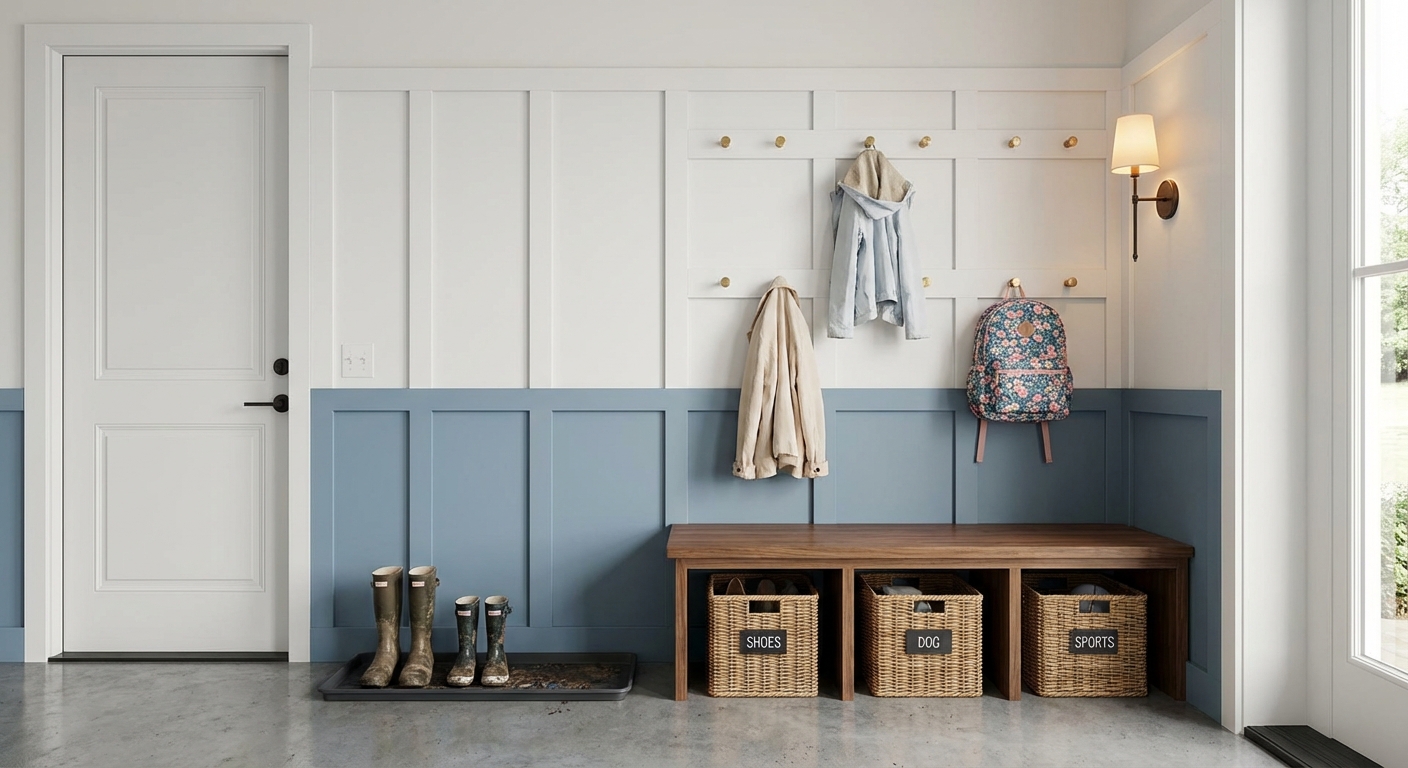
If your family enters through the garage like ours does, carving out a mudroom zone in the garage is one of the best investments you can make. You don’t need to convert the entire garage. Just the wall space near the door to the house.
Budget Garage Mudroom Setup (~$200)
Here’s what a basic garage mudroom looks like:
- Board and batten or beadboard on the wall ($50-80 in lumber): This defines the space visually and gives you a solid surface for mounting hooks.
- Peg hooks drilled into the boards ($15-20): Every 6 inches, at two heights.
- A simple bench ($50-100): IKEA KALLAX or a basic wooden bench from Target.
- Baskets underneath ($20-30): One per family member.
- A boot tray on the floor ($15): For wet or muddy shoes.
The whole thing can be done in a weekend, and the total cost stays under $200 if you shop smart. The board and batten treatment makes it look intentional and polished, not like an afterthought in the garage.
Putting It All Together: Morning Routine Made Easier
The real payoff of a mudroom system is how it transforms your morning routine. Here’s the flow that works for our family:
The night before:
- Kiddos hang backpacks on their hooks (packed with homework and papers)
- Tomorrow’s shoes go in each person’s cubby
- Coats are hung on hooks
In the morning:
- Everyone goes to their zone, grabs their coat, shoes, and backpack
- Out the door
It sounds simple, and that’s the whole point. The system does the work so you’re not hunting for your preschooler’s left rain boot at 7:45 in the morning.
Quick-Start Checklist
If you’re starting from scratch, here’s the order I’d tackle things:
- [ ] Choose your location (entryway, hallway, garage, or closet)
- [ ] Install hooks at two heights (adult and kid level)
- [ ] Add a bench with shoe storage underneath
- [ ] Assign zones with one basket/bin per family member
- [ ] Set up a boot tray for messy weather days
- [ ] Label everything so kiddos know where their stuff goes
- [ ] Establish the “two pairs” rule for shoes in the drop zone
- [ ] Schedule a weekly reset to keep clutter from building up
The total investment for a functional family mudroom setup can be as low as $100-150 if you shop at IKEA and Target, or $200-300 for a more complete hall tree system from Amazon or Wayfair.
—
You don’t need a Pinterest-perfect mudroom to get your family out the door on time. You just need hooks at the right height, a place to sit, and a basket for each kiddo. Start small, build the habit, and adjust as you go. Your mornings will thank you.